Showing posts with label perspective. Show all posts

Thursday, February 8, 2018

Seven Personal Questions

Questions have been used for thousands of years to elicit thought. These seven personal questions to change your life are from a weekly e-mail I receive from Mike Murdock, who publishes the Wisdom Keys.

1
What are you passionate about?

2
Whose world have you tenaciously determined to improve?

3
Whose disrespect will you decide to ignore?

4
Whose attention/approval matters the most to you, and what are you willing to do to keep it?

5
Who has chosen to reject your influence?

6
Who has made (willingly) the most impactful investment in your immediate success, and what has been your reaction?

7
What single goal is worth one hour a day for the rest of your life?

Monday, February 5, 2018

Lincoln’s Fundamental Principles

Lincoln Reconsidered was written by David Herbert Donald. It is a book of essays on Abraham Lincoln. Lincoln’s perspective of politics was unique, and though he often appeared naive, he was an adroit political thinker. These are his fundamental principles.

1
Rejected tests of doctrinal purity.

2
Faced political reality as it was, not as it could become.

3
Refused to force reality into a formula. Recognized each problem as unique.

4
Willingness to change or adapt with events.

5
Did not make irredeemable promises against the future.

“I think it is enough if the man does no wrong hereafter.”—Abraham Lincoln

Sunday, January 21, 2018

Biblical Principles of Conservation

A tenant of the Christian faith is that Jesus will return to earth to usher in the next age, where the earth in its current state will be destroyed an re-created as a new earth. A well-known text in both Christian theology and popular culture is Revelation 21:1, “I saw a new heaven and a new earth, for the first heaven and the first earth had passed away.”

Some Christians believe that because of the end of the world is near, there is no need for conservation. It is permissible, in their minds, to rob the earth of natural resources without any thought to the preservation the environment for future generations.

However, this paradigm is not supported by the Bible. I believe the Bible lays out a clear case for why we need to conserve resources, even if the world ends soon. Below are four principles which advocate for an environmentally friendly, conservation approach to taking care of our home, the earth.

Principle 1: The Earth is the Lord’s


Numerous texts state the true ownership of the earth: it belongs to God.

  • Psalm 24:1 The earth is the Lord's, with its fullness; the world, and those who dwell therein.
  • Colossians 1:16-17 For by him all things were created, in the heavens and on the earth, things visible and things invisible, whether thrones or dominions or principalities or powers; all things have been created through him, and for him. He is before all things, and in him all things are held together.
  • Leviticus 25:23 The land shall not be sold in perpetuity, for the land is mine; for you are strangers and live as foreigners with me.


Principle 2: We are God’s Stewards/Caretakers


Logical follows that if the earth and everything in it belongs to God, our position is to care for what has been entrusted to us.
  • Genesis 2:15 The Lord God took the man, and put him into the garden of Eden to cultivate and keep it.
  • Genesis 1:26 God said, "Let us make man in our image, after our likeness: and let them have dominion over the fish of the sea, and over the birds of the sky, and over the livestock, and over all the earth, and over every creeping thing that creeps on the earth."
  • Jeremiah 2:7 I brought you into a plentiful land, to eat its fruit and its goodness; but when you entered, you defiled my land, and made my heritage an abomination.

Principle 3: Learn From Nature


Several verses specifically call on us to learn from nature. How can we learn from the natural world if it is destroyed?
  • Job 12:7-10 But ask the animals, now, and they shall teach you; the birds of the sky, and they shall tell you. Or speak to the earth, and it shall teach you. The fish of the sea shall declare to you. Who doesn't know that in all these, the Lord's hand has done this, in whose hand is the life of every living thing, and the breath of all mankind?
  • 1 Chronicles 16:33 Then the trees of the forest will sing for joy before the Lord, for he comes to judge the earth.
  • Matthew 6:26, 28 See the birds of the sky, that they don't sow, neither do they reap, nor gather into barns. Your heavenly Father feeds them. Aren't you of much more value than they? Why are you anxious about clothing? Consider the lilies of the field, how they grow. They don't toil, neither do they spin.

Principle 4: Use Only What You Need


Perhaps a more controversial principle, do not use resources to excess. In the mid nineteenth century, the buffalo was almost hunted to extinction in the United States. Thousand of pelts were shipped to the eastern, more industrialized part of the United States for use as belts in machinery, clothes, and decoration.
  • Numbers 35:33-34 So you shall not pollute the land in which you are; for blood pollutes the land. No atonement can be made for the land for the blood that is shed in it, but by the blood of him who shed it. You shall not defile the land which you inhabit, in the middle of which I dwell; for I, the Lord, dwell in the middle of the children of Israel.
  • Ezekiel 34:18 Does it seem a small thing to you to have fed on the good pasture, but you must tread down with your feet the residue of your pasture? and to have drunk of the clear waters, but you must foul the residue with your feet?
  • Deuteronomy 20:19 When you shall besiege a city a long time, in making war against it to take it, you shall not destroy its trees by wielding an ax against them; for you may eat of them. You shall not cut them down; for is the tree of the field man, that it should be besieged by you?

Monday, January 15, 2018

Top 10 Coaching Tips from Hilton Johnson

Every day I receive coaching tips from Hilton Johnson Productions. At the time of this writing, the company’s website appears to be down. However, I still receive tips daily.


I have a folder in my email where I save any tips that I like. From my saved tips, the ones below are my favorites for 2016.


1

Giving a presentation without having a new sales recruit watch or hear you do it is a waste of energy, talent and valuable training time.


I love the idea of always being in training mode. What can you learn from a given situation, and what can you teach others?


2

What's 80 times more effective than cold calls?


A study by Selling Power Magazine states that...

  • 1% of all cold calls turn into sales
  • 15% of all leads turn into sales
  • 55% of all referrals turn into sales
  • 80% of all introductions turn into sales


I’ve heard a similar statistic for bringing to members in a church. Mailing out invitations to an evangelistic meeting is not nearly as effective as “friendship evangelism.” Personal connections make a difference in the effectiveness of your presentation.


3

People who spend their time multi-tasking are not as creative, productive, or happy as someone who is totally focused on just one task at a time.


Studies have shown that multi-tasking consists of rapid switching back and forth between activities. It seems simultaneous, but it is not.


4

One of the best ways to learn a good presentation is to write the language down on 3x5 cards, take a few of them with you wherever you go, and memorize them one at a time.


A 3x5 card is the ultimate paper app. You can write and draw on cards, easily rearrange them, and access them without technology. Using 3x5 cards is effective when learning a new presentation as well as for any type of information that needs to be learned.


5

The most powerful thing you can do to get people to take action is to create emotion within them. You do that by asking questions that get them thinking and talking.


6

Create multiple income streams by speaking, training, making online programs, coaching, publishing and providing tools for others to succeed.


This is an inspirational goal for me. This is similar to the idea of transmedia, but with more structure in a way that can be monetized.


7

You can ask all the questions you want (even personal ones) in your presentation by simply asking permission to do so before you begin. Here's what you say: "It would be helpful for me to understand more about your situation. May I ask you a few questions?"


Teachers have used questions for thousands of years. Socrates introduced this concept into the Greek philosophy. In the book of Genesis in the Bible, older than Socrates, God used questions when speaking with Adam and Eve, and again when addressing Cain after he murdered his brother. Jesus frequently used questions to engage his listeners.


8

Learn to be a good speaker. You'll get to make multiple sales with a single presentation.


9

Before offering the benefits of your products or services find out if your potential prospect has problems that your products or service will solve. That way you'll only give presentations to people who are interested and qualified.


10

Create a "Keepers File". When you read articles, find quotes and discover ideas you like, put them in the file for reference. They are a great resource for writing articles, training classes and stimulating your imagination.


I have read this same suggestion in the writings of Jim Rohn, John Maxwell, and others. For a few years I pasted articles or rewrote article summaries into a spiral bound notebook. Now I save many articles electronically or make a note in my planner. 

Thursday, January 11, 2018

Update for Writing 365

In my previous post, I described how my effort to blog consistently in 2016 did not work out.

I am happy to report, however, that not all of my writing efforts were a fail. At the end of 2015 I set a goal for 2016 to write 1,000 words per day every day for the entire year, 365 days.

I tracked my process, and provided updates on a monthly basis. My July update was the last official entry on the status of the project. By July I had already written over 320,000 words.

By the end of the year I wrote 483,790 words in primarily four categories: daily journal, blog posts, Christian essays (I wanted to write a devotional), and ebooks.


Initially I had hoped to write 250 words per day in each of the categories, but somewhere along the way I decided to focus on writing ebook content. I also discovered that my daily journal entries gradually increased in length. As a result, I exceed my writing goal.

This chart shows my journey to 365,000 words and beyond.
For me, while writing 1,000 words or more per day was exciting, I found that the experience burned me out a bit for writing. I spent 2017 working on editing and publishing tasks, but wrote very little.

In future posts I will be sharing the tangible result of my Writing 365 project.

If you do not have writing goals, I encourage you to start with a small overall goal, like 10,000 words, or a daily goal of 250 words. 


Wednesday, January 10, 2018

Starting Again

This is a new year, and an opportunity to begin again. 

Previously I wrote a few posts on various topics related to generating ideas for blog posts.
With all of this knowledge, you might think that I would be a faithful blogger. However, in 2016 I was consistent until September. You can see the decrease in the number of posts by month in the chart below. 


Now, after a lengthy break, I have again decided to start blogging. One primary difference for this new effort is that I am going to have simple posts. I am not going to worry about writing at least 500 words to optimize the Google search. I am going to write the posts I want to write, drawn from a variety of sources, including the suggestions found in the two posts above.


Thursday, September 1, 2016

Early To Rise

Increase your productivity by waking up earlier.


On the Page

Recently I listen to an episode of the podcast, On the Page, a podcast designed for screenwriters, you can "join professional script consultant Pilar Alessandra as she demystifies screenwriting and answers your questions about script craft and story." I stumbled on this podcast in search of resources for creative story telling.

The guest in Episode 468 was Marc Haimes, a screenwriter involved in several successful films and currently working on many projects. In the podcast, Marc revealed one of his secrets to getting things done: He wakes up early. Marc said he prefers to start working at 5AM with the goal of being 70% done with his work by 10AM. He referred to the 5AM hour as yielding "triple dividends," the 6AM hour as yielding "double dividends," and from 7-9 as a "good time" to accomplish his tasks. Marc likes to plan for the next day as he turns into bed by asking questions he needs to answer in the morning. This way, his subconscious can start working while he sleeps.

Facebook Post

The next day, as I was perusing by Facebook feed, I noticed that several of my friends had shared an article titled, "Why the most productive people start their day at 4 a.m. (yes, we're serious)." In the article, the authors wrote about currently well-known individuals who rise early:

  • Tim Cook (CEO of Apple), 3:45AM
  • Richard Branson (found of the Virgin Group), 5:00AM
  • Michelle Gass (Kohl's department stores), 4:30AM


I shared the post on my Facebook feed, and many of my friends commented. It turns out that some of them also rise early, ranging from 3AM to 5:30AM.

An Ancient Practice

In researching for this article, I typed "Ben Franklin early to bed early to rise" into Google Search. One of the first results was a brief article at Wikipedia on this topic of waking up early. Who knew this warranted its own entry on the iconic online encyclopedia? The authors of the articles quoted Aristotle, the Greek philosopher, "It is well to be up before daybreak, for such habits contribute to health, wealth, and wisdom."

I previously wrote about Anthony Trollope, who wrote from 5:30-8:30AM every day before starting his full-time job as a postmaster for the British postal system.

Throughout the Bible you will find many examples of characters rising early. Abraham rose early to see if Sodom had been preserved or destroyed. Jacob rose early after his vision of the ladder to heaven. Joshua rose early to vanquish his enemies. Moses rose early to meet with God. In a time when the availability of natural light moderated activities, it was necessary to rise early in order to take full advantage of the entire arc of the sun, from sunrise to sunset.

Benefits of Rising Early

Below are a few benefits I came up with for rising early.

  1. Local quiet time for personal improvement - In this international economy, someone is always awake and working, so you won't be able to find a time when everyone is sleeping. However, it is still fairly quiet locally wherever you are. You can use this quiet time for developing a spiritual practice, exercise, writing, reading, or some other personal improvement activity.
  2. Fewer interruptions - Because most people and animals are asleep, you can accomplish activities with fewer interruptions. Writing documents for work, responding to e-mails, and individual brainstorming are easier if you do not have to worry about family and professional interruptions.
  3. Sense of accomplishment - By getting an early start, you can have a larger portion of your day's work completed well before the day ends.

Challenges of Rising Early


  1. Extra effort is required. If you are not naturally "a morning person," you may have difficulty waking up at such an early hour (whether it is 4AM or 5AM). However, a good alarm clock and a personal commitment to start earlier can help.
  2. Early bedtime discipline. Based on the number of hours of sleep you require (I prefer 7 hours), you will need to adjust your bedtime to accommodate an earlier wake up time. 
  3. You need a plan. Waking up "just because" may not provide the motivation you need to wake up early. Develop a plan for how you will utilize your early morning time. Find a spiritual book or program to study, answer questions from the night before (like Marc Haimes), or commit to an exercise routine. 

I encourage you to try waking up an hour earlier for at least a couple of weeks. I believe you will see an increase in productivity.


Thursday, August 18, 2016

Listen to a podcast daily

Never quit learning - listen to a podcast daily

A combination of broadcast and pod, short for Apple iPod, a podcast is an episodic audio or video program available for download via the Internet. Podcasts span a range of subjects, lengths, and publishing schedule.

Podcasts are a great way to learn new information and/or be entertained. Podcasts are:

  • Free
  • Easily downloadable—downloads can be scheduled
  • Available for a wide range of topics—current categories at Apple's podcast store include arts, business, comedy, education, games/hobbies, government/organizations, health, family, music, news/politics, religion/spirituality, science/medicine, society/culture, sports/recreation, technology, and TV/film.
  • Asynchronous—you control when and where to listen, including the ability to rewind and fast forward content.


Another great benefit of podcasts is that you can download them to your smart phone to listen to while exercising, commuting, and working.

I listen to a variety of podcasts including political commentary, screenwriting, investigations into the paranormal, grammar tips, and literary history and news. It is possible that none of these may appeal to you. That’s fine. Search for the podcasts that will be interesting.

Thursday, August 11, 2016

Read a blog post daily

Never quit learning - Read a blog post daily

Blogs are proliferating everywhere online. A truncated version of "web log," a blog is an information page that consists of several entries, known as "posts," usually with the most recent appearing at the top of the page. Most blogs feature the ability to search for various posts either by keyword or date. It is easy to start a blog, and many begin this journey but abandon it along the way. Millions of blog sites exist.

The vast majority of blogs are hosted by Blogger, part of the Google family, or Word Press. For the purpose of searching for information, it doesn't matter where a blog is located as long as it is easy to find and maintained with current information.

President Theodore Roosevelt was an avid and prolific reader. On a typical day, he read 2–3 books, sometimes more! However, some recent statistics suggest that people are not reading books like previous generations.

Consider these findings from the Barna Group: 

  • 35% of adults say books are too long 
  • 41% of men and 28% of women feel books are too long 


Percentages of respondents that feel books are too long:

  • Elders (born before World War II): 27% 
  • Baby Boomers (born between 1945 and 1964): 30% 
  • Generation X (born between 1965 and 1981: 31% 
  • Millenials (born between 1982 and 2003): 49% 


Considering that from one-third to one-half of people believe that books are too long, blogs are the perfect solution. Most posts are fairly short and, if following the proper structure, clearly delineate different sections by using headers and lists. This structure accommodates both those who will take the time to read the full post as well as those who will only scan the highlighted information. Regardless of your interests there are blogs for you. Search for an area of interest and add "blog" to the search. A listing of blogs related to your search topic will be displayed.

Thursday, July 28, 2016

Read a book monthly

Never Quit Learning: Read a book monthly

For one of my classes in high school, I wrote a paper on aspects of the Roman Empire. Josephus, a Jewish historian, wrote one of the books that I needed. My school's small library did not have the book. Instead, I had to order my own copy of The Collected Works Of Josephus. When the large volume (about the size of a dictionary) came, I used it for probably thirty minutes! Still, it was a resource that I needed at the time. Today, if I needed to read Josephus again, I could simply utilize a free, online source.

Books have never been less expensive and more available than they are today. Even with today's online bookstores, you can't really appreciate how many books are published unless you visit a library or bookstore. I enjoy visiting a brick-and-mortar physical bookstore such as Barnes and Noble or Books-A-Million. It is always interesting to me how books are available that no one ever buys. In the life cycle of traditionally published books, books that are prominently displayed at the front of the store one month may end up in the dollar bin later on, or at best, heavily discounted. Even sadder, I was at a charity thrift store, where donations of items are sold inexpensively, and saw 100 brand new copies of a book.

There are three basic formats for books: print, electronic, and audio.

Print

Printed books are traditionally how books have been published. Until the mid-1900s technologies did not exist to sell books in other formats. Even with the variety of technologies and devices available today, books and information printed on paper are still the most permanent and most portable. Print does not require software updates or electronic devices.

In 2000, my office gave me a new Palm Pilot. The Pilot was popular at the time and provided functionality to keep track of appointments, contacts, notes, and e-mail. I transferred all of my information into the device and it worked well ... until the battery died. There was not a way to replace the battery, and so I reverted back to a paper-based planning tool. I still use a paper-planning tool. Even if I still had the Palm Pilot today, most likely I could not retrieve the information in an electronic format to load into another, more contemporary device.

e-Books

Even though I still purchase books printed on paper, I also buy electronic books, known as “e-books.” E-books are convenient because they can be viewed on a variety of devices including computers, smart phones, tablets, and dedicated e-book readers. For books designed for Amazon.com's Kindle platform and for Apple's iBooks, content is available concurrently on all devices, so you can start reading on your computer and keep reading on your smart phone. E-books are also usually less expensive than their printed counterparts.

Soundview Executive Summaries provides succinct, four-page summaries of business books. One of the factors they use to rate books is shelf life. If a book covers content that is likely to be out-of-date in a short period of time, it has a short shelf life. Every four years, as part of the lead up to U.S. Presidential elections, a variety of political commentators, and increasingly the candidates themselves, publish books. Mitt Romney was the Republican candidate for President in 2012. The books about him are now available secondhand for as little as $0.01! Alternatively, books that cover broad topics can remain popular for years.

To help me decide on whether to purchase print books or e-books, I use the following criteria, created here as a flow chart.

Audio books

Audio books are especially useful when traveling, whether part of a daily commute or long trip. Audio books, like e-books, work across many platforms. However, unlike e-books, audio books are usually more expensive than printed books. The primary reason for this is due to the extra costs to produce and record the reading of the book.

Whether you purchase books new or used, or borrow from a library, take the time to read one professional book per month. In addition to books that may specifically focus on your area of expertise, many broad categories such as communication, marketing, sales, and personal improvement are beneficial to read.

Sunday, July 17, 2016

Find answers on the Internet

Never quit learning - find answers on the Internet.
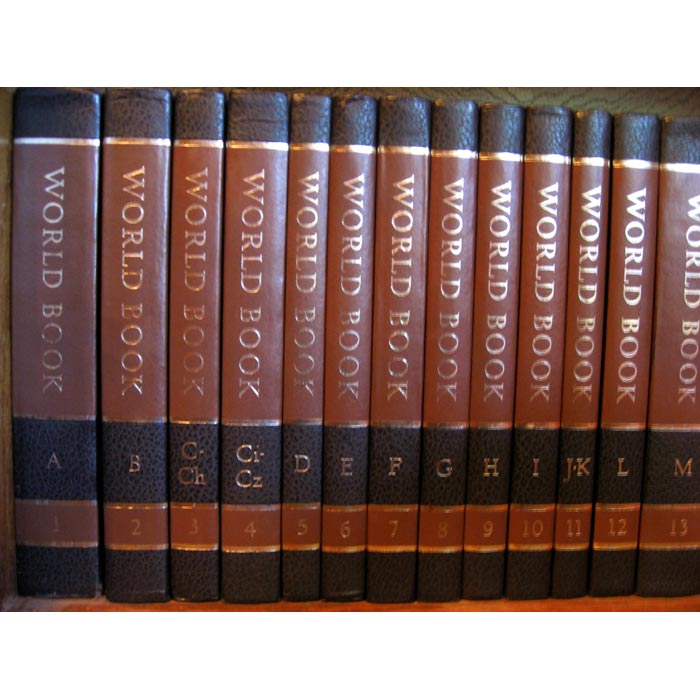
When I was eleven years old, my parents purchased a set of the 1980 edition World Book Encyclopedia. This multi-volume set included a book for each letter of the alphabet and also included some additional reference materials, including a two-volume dictionary. I loved these books. Whenever I had a question about something or when my brother would ask, “I wonder how they make that?” I would be found in our small family library reading about the answer. Although the World Book Encyclopedia is still published (the current edition is available for around $1,099.00), information changes so rapidly now that it seems like printed references would quickly become out-of-date.

Today, when I wonder about something, I conduct an Internet search. The top three general search sites are Bing, Google, and Yahoo! I use these interchangeably, with similar results for web searches, images, and news. Google is so popular that it has become a genericized trademark, a euphemism for searching online (e.g., “Just Google the answer.”).

My father taught computer technology at the university level. While the emphasis of computer science is software development and programming, my father's work was in the area of electronics and computer design, assembling various components onto a circuit board and then programming it for applied functionality, such as robotics. I grew up with computers and computer parts in the house. For a time, my father also built computers for others. I never had an interest in building computers, but was exposed early to computers and have always been an avid user of software.

Now, I have become the software help desk for my family. When they have a formatting question in Microsoft Word or a formula question in Microsoft Excel they call me. If I don't know the answer I search for it online, often while on the phone with them. When I inevitably asked, “Did you search for the answer online?” the answer is “No, it's easier to call you.”

For virtually any topic you can type, “How do I” followed by the topic:

  • How do I … create a HTML table? 
  • How do I … save a Keynote presentation as a PDF? 
  • How do I … get to the power settings on a Mac Air? 
  • How do I … make cream cheese frosting?


Chances are, if you are wondering about something, someone else in the world has also thought about it and published an answer online. Blogs, wikis, frequently asked questions (FAQs), and other websites will hold the answers. The challenge is that, just as every individual is different, each answer you find may differ in terms of its technical accuracy, application to your question, and relevance.

Internet browsers include functionality to save webpages as favorites. There are also several browser add-ons or applications for tablets and smart phones that permit you to quickly save or share a webpage for later reference. At the time of this writing, two popular are Evernote.com and GetPocket.com. Both feature accessibility across all of your devices. When you find useful answers save the page.

Thursday, July 14, 2016

Master your tools

Never quit learning - master your tools


In France, there is evidence that even thousands of years ago people made visual records of their current events. It is likely that rock or pieces of charred wood were used to make these drawings. Throughout the world are other evidences that people have been drawing and writing for a long time. As technology advanced tools were refined and improved.


However, even when drawing on a cave wall with a charred stick, there's a right way and a wrong way to hold the stick. If you hold the charred end, only your hands will be left with evidence of your efforts. These early artists had to master their simple tools.

Mastery of tools is what separates amateurs from professionals. I love photography and have a digital single lens reflex camera (SLR) that enables me to customize the aperture, shutter speed, white balance, and many other parameters. Once I've taken several pictures, I can take the SD memory card out of the camera and transfer the photos to my computer where I can edit them using Adobe Photoshop or some other program. Like my SLR camera, Photoshop is replete with so many parameters and features that it take can many hours of study, reading, and experimentation to learn all of the different effects, tools, and ways to manipulate your images.


Most of the time, I just use my smart phone camera to take pictures. The native camera app allows me to edit the pictures as soon as I take them wherever I am. If I need a deeper level of editing, I can turn to any of the many photography apps I have installed. Most of these apps allow me to share photos directly to the Internet on Facebook, Flickr, Instagram, and other similar sites.

Even though I enjoy photography, I am not a professional photographer. The time and energy needed to master the SLR camera and sophisticated editing software does not interest me. I want to take and edit photos quickly. However, I have learned how to use the features of my phones camera and editing apps.

Benefits of mastering tools

Mastering your tools provides two benefits. 
  1. By taking advantage of shortcuts and built-in features, you can maximize your productivity. You can take repetitive actions faster and more efficiently. 
  2. Mastery of the tools you use will build your competency so that you not only have more skills, but can also share information with others.


Regardless of the technology you use, you can find tips by searching on the Internet. Additionally, most of the user manuals or online help sites will provide information on features and shortcuts.

Sunday, July 10, 2016

Be willing to learn

Never quit learning - Be willing to learn


My mother-in-law has a couple of factors that present technological challenges for her. First, as an emigrant from South Korea, she does not speak much English. Second, as a senior citizen, she does not have the same technical fluency with computers, smart phones, and the like as my teenage old daughter does.

When her classic cell phone, a flip phone, stopped working, I suggested that she take my iPhone 4S. Although I like to think of myself as a generous son-in-law, my motivation was partly self-serving. By giving my phone to her, I could upgrade to a newer model.

My mother-in-law accepted the iPhone, but assured my wife and I that she only wanted to learn how to use it for phone calls and, she added, maybe to use Face Time, the built-in feature for video chatting, to speak with my wife. However, the next morning she told my wife that she wanted to download some apps to watch news from Korea.

Over the next few weeks my mother-in-law learned how to type on the phone's small on-screen keyboard (in Korean, by the way) and to even send emoticons to my wife when texting.
It is never to late to learn something new. The saying “You can't teach an old dog new tricks” is not really true, literally for animals or figuratively for people.

I once knew an elderly gentleman, Robert, who loved to learn. Robert started working on his doctorate of philosophy in history when he was 81 years old. Working through the curriculum over a few years, he graduated at the age of 85!

My great uncle Alban was also curious about new technologies. Long before the Internet existed as it does today, with a variety of online options for e-mail, he used a box that connected to his television to send e-mails to family members. He was in his eighties at the time.

Did Robert and Alban wait until they were octogenarians to adopt an attitude of continually learning? Of course not. An attitude of learning should be developed early in life. At whatever age you are now, you can choose to be willing to learn. What can you do today to adopt this attitude?

First, whenever you come across something that you are unfamiliar with, take the time to learn about it, whether that means finding a solution to a problem or increasing your knowledge. If you are reading and encounter a word you don't know, look it up or write it down to look up later. Even if you don't remember the definition later, taking this learning action will help you; it will strengthen your mental powers. Likewise, if someone mentions facts during a presentation, meeting, or sermon, ask for the reference and verify the source yourself.

Second, look for opportunities to learn. Books, webinars, classes, online articles, and so on are more available than ever. Many resources are free.


Third, be open to alternative points of view. We have a tendency to evaluate quickly when listening to others present their opinions. Take the time to understand where others are coming from. While others are speaking, try to refrain from already crafting a response. By taking the time to listen to others, you may learn something about them or the situation you are discussing.