Tuesday, August 11, 2015

How I wrote my memoir in 44 days

Below is the introduction from my new book, 60,000 Words in Six Weeks: How I wrote my memoir in 44 days. It is available from Amazon.com.

On Writing Well

Several years ago I read the book On Writing Well by William Zinsser. He recommended that aspiring authors write one story per day for 120 days. At the conclusion of those four months, writers should discard everything they wrote. According to Zinsser, it takes that amount of time to find the voice and rhythm for narrating a story. I followed his suggestions for about two weeks, but stopped writing.

My 500 Words

More recently, I came across the website my500words.com. This is a challenge presented by the author Jeff Goins. The basic rule of My 500 Words is to write five hundred words per day for thirty days. I decided to give it a try. However, rather than write a series of thirty articles on random topics, my goal was to write a cohesive narrative where all of the entries connected in some way. I decided to write about a topic I knew well, my life.

30 into 120

In thinking about this writing challenge, somewhere along the way, I converted the 30 days into 120 days, and thus a total of 60,000 words rather than 15,000 words. Even after I realized this faux pas I still committed to completing the longer project. To help me stay motivated I envisioned my memoir as a printed book. As most printed books average 250-275 words per page, I knew that 60,000 words could potentially result in a 200-page book, a reasonable first effort.

I wrote 60,027 words in 44 days. After some basic editing, I setup the text to resemble a book and printed it using an online print-on-demand publisher. This e-book is about my process. Each chapter answers a series of questions I asked myself along the way. I hope you will find inspiration and motivation from my experience that you can apply to your own writing journey.

60,000 Words in 6 Weeks

If you ever thought about writing a book or are currently writing, I believe that 60,000 Words in 6 Weeks will help you. While there are a number of excellent books that discuss creative writing, storytelling, and other aspects of the writing craft, my book is a practical one to help you track the progress that you make everyday.

Friday, August 7, 2015

Paradigm-Changing Books

Merriam-Webster defines paradigm as "a theory or a group of ideas about how something should be done, made, or thought about."

A number of books are read every year that affect readers in some way. While some books clearly delineate two different ways of approaching the world, many others make an impact in a more subtle way, by introducing a new way of thinking that lingers in the mind after reading.

The books listed here are books that I have read which have affected me by either affecting actions  I take or my way of thinking. These books have changed my perspectives on the world.

True Believer - Eric Hoffer
In True Believer, Eric Hoffer presents a theory about why people join religious groups, cults, and followings. Why do people leave a seemingly normal life and risk everything by joining groups like ISIS (the Islamic State) or contribute to political change? Drawing on examples from events during his life, Hoffer's philosophy still applies.

 7 Habits of Highly Effective People - Stephen R. Covey
This book contains seven habits that will help you prioritize activities in your life, set better goals, improve interactions with others, and become more effective personally and professionally. Perhaps the most famous of the habits, "Begin with the end in mind," is also one of the best.

How to Win Friends & Influence People - Dale Carnegie
Like 7 Habits, this book contains simple, common sense tips, but they are so hard to apply! The first nine principles lay the foundation for the rest of the book. Filled with examples the book is easy to read and definitely worth rereading from time to time. The first principle, never criticize, condemn, or complain, is one that I continually work on.

Science & Human Behavior - BF Skinner
Although Skinner is largely unknown outside of the professional mental health community, Skinner's work is well known because we all apply his principles to our lives. We are continually seeking to alter our own behavior as well as that of others. If you've ever given a children a smiley sticker in order to increase the likelihood that the positive behavior will continue, you've applied Skinner's work to your life. In the book, the author describes the essentials of how to modify behavior with reinforcement, extinction, and punishment. These three are not equally effective.

The 45 Second Presentation That Will Change Your Life - Don Failla
Although this book is geared towards network, multi-level marketers, the basic concepts of recruiting people into your organization, creating a sustainable plan for training, and motivating others apply to everyone. Consisting for 12 presentations, the genesis of the book came from the idea that you can sit down with someone at lunch and draw this information out on napkins.

The Memory Book - Harry Lorayne and Jerry Lucas
When I was in college I found myself failing the daily map quizzes in history class. Looking for any help to improve my grades, I came across this book. I applied a couple of the simple techniques in order to memorize the various locations on the maps, and significantly improved my scores. Although I lost the copy I owned in college, I now own this as an e-book and am continuing to work on applying these principles for a better memory.

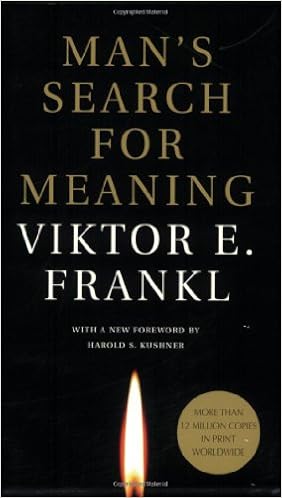
Man's Search for Meaning - Viktor Frankl
Half of this book is about Viktor Frankl's experience in the Nazi concentration camps during World War II. A psychiatrist prior to the war, he lost his wife and other family members. However, while he noticed that many around him simply lost all hope for the future, he continually made plans for his life after the war. This mindset helped him tolerate the terrible situation into which he was forced. The second part of the book is his theory of psychology drawn largely from his experiences and observations.

Made to Stick: Why Some Ideas Survive & Others Die - Chip & Dan Heath
Why is it that we can easily recall the various urban legends we read about on Facebook but can't recall the discussion from yesterday's staff meeting? There are principles that, if applied, will help our messages to family, coworkers, and customers more likely to be retained. The authors present six principles to improve the "stickiness" of ideas.

Modern Mind Mapping for Smarter Thinking: Tony Buzan
Mind mapping is a visual brainstorming method that consists of writing a topic in the center of a page and then writing 4-5 keywords or facets of the topic around the topic. By connecting lines between the topic and the keywords, and subsequently to more specific details, you are, according to Tony Buzan, mimicking the way our synapses fire in our brains. Our minds do not catalog information in a linear fashion, but continually search for connections in order to retrieve stored knowledge. The mind mapping technique will increase your creativity.

Propaganda - Edward Bernays
Why is it that we wear denim jeans and eat bananas? Edward Bernays breaks it all down by revealing the secrets used by governments, corporations, and other groups to influence populations to adopt a certain paradigm. Propaganda is not just for enemy governments pushing their agenda. Every organized agency utilizes it to some degree.


What do you think about my book selections? What books have you read that have changed your life?

Tuesday, August 4, 2015

Farewell Office Jet 4300

About ten years ago I walked into an office supply store in search of a new printer. Both of the inkjet printers I owned had stopped working, and I needed a replacement. As I walked through the aisles of all-in-one printers, single function inkjet printers, and laser jet printers, I was still unsure which model to select. I didn't want to invest a great deal of money, but wanted a printer that would last  a few years.


Not feeling satisfied with the models available at the store, I walked towards the exit. That's when I saw the printer sales table. There was a brand new small, white printer, but for some reason on sale. It was listed for $50.00. The printer, a Hewlett Packard Office Jet 4300 turned to be an all-in-one printer with printing, faxing, copying, and scanning capabilities.

After Hewlett Packard stopped supporting the printer, I was no longer able to use it as a scanner. Faxing is not possible for me as I don't have a landline phone. Additionally, more recently, most printers have wireless capabilities, which allow printing from mobile devices as well as computers. For that reason, I decided, I would purchase a new printer when the ink cartridges ran out of ink. I began a relaxed search for a new printer.

Unfortunately, while in the middle of relocating my home office from the bonus room to vacant bedroom, I inadvertently knocked by printer off a tall dresser. After plummeting about four feet, the printer crashed to the floor, remaining in the location when photographed (see above picture).

I reconnected the printer. It cycled as though it would still work. However, although I heard the print heads moving as part of the initial power-up process, the printer displayed a jam message. Several times I tried to start the printer, each time with the same result.

After many years of excellent printing, I placed the printer in a bag for recycling. Office Jet 4300 served me well, and I definitely got my money's worth, at the tune of $0.42 per month, excluding printer cartridges, but that's another post.

Thursday, April 30, 2015

Follow Up Then

The company for my day job uses Microsoft Outlook as the platform for e-mail, scheduling, and tasks. One convenient feature is the ability to create tasks and appointments from e-mails, add reminders to e-mails, and flag e-mails for others to respond.

Yahoo doesn't have reminders

I have often wished that my primary personal e-mail, hosted by Yahoo!, could provide similar functionality. The best solution has been to flag e-mails so that they are easy to find. Occasionally, I have also forwarded a message to myself so that I could modify the subject line to include a date. The problem with configuring Outlook on my personal computer is that it is only applicable to the computer but not to other devices (e.g., tablet and smart phone) where I also check mail.


Follow Up Then

Recently, I discovered FollowUpThen.com. The site offers the functionality that exists within Outlook but is missing from Internet-based e-mail services, at least the ones that I utilize.

Setup is easy

The first step is to register your e-mail address at FollowUpThen.com. From that point forward any message that is sent to the FollowUpThen domain from your registered e-mail address can be used to configure reminders, add tasks, and add calendar events.

Basic Examples

If you have received an e-mail that you want to set aside a certain date in the future or day of the week, you would simply forward the e-mail to FollowUpThen as follows:

Monday@FollowUpThen.com or July27@FollowUpThen.com

  • If you have received an e-mail that you would like to create as a task, or you want to create a task from scratch, send the e-mail to FollowUpThen as follows. The task renews each day until marked as completed or canceled.

Monday-t@FollowUpThen.com or July27-t@FollowUpThen.com

  • If you want to also send a text message via SMS as a reminder, set it up like this:

Monday-sms@FollowUpThen.com or July27-sms@FollowUpThen.com

  • You can also include specific times as well as dates or days:

Monday645am@FollowUpThen.com or 645amJuly27@FollowUpThen.com

Advanced Examples

In addition to sending reminders to yourself, you can also use FollowUpThen to send reminders to others. If each of the examples above was placed in the CC line, when sending an e-mail to someone, that person or group of people would receive the same reminders you receive. If you drop the examples in the BCC line, you would receive the reminders.

Tasks, SMS, and Calendar functions can be combined (e.g., Monday-sms-t-c).

Additional Information

Each time you create a reminder is created, a notice is e-mailed to you. Additionally, periodic summaries of upcoming reminders are generated by the FollowUpThen site. You can also edit and delete reminders from the FollowUpThen.com website.

Cost

FollowUpThen offers a 30-day trial of the professional level. At the conclusion of the trial you can continue using the service with free, personal ($24/year) , professional ($5/month), and company plans ($9/month for 2 users). Beginning with the free plan, each offers an increased number of reminders and additional features. 

If you need a reminder system for your personal e-mail try out FollowUpThen for the free trial. If you like it, as I did after sending one reminder, you sign up for the recurring service.


Sunday, April 19, 2015

Webinar Review - How to write an e-book in an hour

Last week I watched a webinar hosted by Daniel Hall featuring Robert Plank. Robert is an online entrepreneur and prolific e-book author. Robert covered three different content creation strategies in the webinar. The most interesting one, in my opinion, was how to write an e-book in an hour.

Choose a topic

The strategy is fairly simple. The first step is to determine a topic for your book.

7 questions as chapters

The second step is to develop seven questions that address various perspectives of your topic. For example, if your topic was "Creating and using a blog," the seven questions might be:
  1. What is a blog?
  2. How do I set up a blog?
  3. Where do I get content for my blog?
  4. How can I share my blog with others?
  5. Which platform is best for my blog?
  6. How can I use my blog to support my business?
  7. How can I optimize my blog for search engines?

Why/What/How/What-if questions

For each question, ask four more questions:
  1. Why is this important?
  2. What are we going to do?
  3. How do we do it?
  4. What-if I do this ... what's the next step?

For example, using one of the seven questions above, the questions might look like:
  1. Where can I get content for my blog?
  • Why is it important to keep developing content?
  • What are some tools to create content?
  • How do I create posts?
  • What-if I create content, what are different ways I can utilize it?

Record audio and transcribe

The process, according to Robert, is to record yourself speaking on each of the Why/What/How/What-if questions for two minutes. Seven topics/chapters times four sub-questions times two minutes per questions results in about an hour of recorded audio.

Once you've completed recording the audio, send it to a transcription service such as oDesk.com to convert the audio into a printed document.

Publish as an e-book

There are several resources to format the text as an e-book and publish on Amazon, Lulu, Nook, Google, and other online bookstores. I will discuss this process in a later post.


Tuesday, April 7, 2015

Back on the wagon

I've taken a brief hiatus from posting. OK, it's been more like six months, but I'm back on the wagon.

I once had a discussion with someone about which is the preferred place to be: riding on the wagon or falling off the wagon.

The following origin story for the phrase is from The Encyclopedia of Word and Phrase Origins as quoted in the English Language & Usage page.

The original version of this expression, 'on the water wagon' or 'water cart,' which isn't heard anymore, best explains the phrase. During the late 19th century, water carts drawn by horses wet down dusty roads in the summer. At the height of the Prohibition crusade in the 1890s men who vowed to stop drinking would say that they were thirsty indeed but would rather climb aboard the water cart to get a drink than break their pledges. From this sentiment came the expression 'I'm on the water cart,' I'm trying to stop drinking, which is first recorded in, of all places, Alice Caldwell Rice's Mrs. Wiggs of the Caggage Patch [1901], where the consumptive Mr. Dick says it to old Mrs. Wiggs. The more alliterative 'wagon' soon replaced cart in the expression and it was eventually shortened to 'on the wagon.' 'Fall off the (water) wagon' made its entry into the language almost immediately after its abstinent sister.

For now, I am back on the wagon, and hope to post regularly.

Monday, November 3, 2014

Time Lapse Camera Apps for iPhone Compared

At the risk over over-simplifying the classification of video techniques, there are basically three video speeds: slow motion, regular speed, and fast motion. A variation of video that is played faster than recorded is time lapse. Time lapse video actually takes a series of photos and combines them together as a video.

When used with animated characters, this technique is referred to as "stop motion," because the characters can be move slightly with each picture, suggesting movement. While there are several apps dedicated just to this, I'll review them another time.

For today's post, I am sharing my notes on three camera apps for the iPhone that include options for time lapse video.